


Infectious Diseases
- Presentation
- Healthcare services
- Team
- About diseases or procedures
- Research
- Teaching
- Contact
Codi servei:
Recerca:
The research carried out in the Infectious Diseases Service is conducted through the Lluita contra les Infeccions Foundation, a leading entity in clinical research, treatment and care of infectious diseases, and IrsiCaixa, an international centre and leader in research on HIV/AIDS, COVID-19 and related diseases, the Germans Trias i Pujol Research Institute, a research centre that works to increase scientific knowledge to improve the health and medical care of patients and the community, where we conduct translational research on Legionella and other bacterial diseases, and BCN-Check Point, a community centre for the detection of HIV and other sexually transmitted infections.
Additionally, the Lluita contra les Infeccions Foundation has two essential support services to promote, accelerate and consolidate the scientific rigour and the highest ethical and regulatory standards of the Infectious Diseases Service's research:
- CTU – Clinical Trials Unit. The Foundation's Clinical Trials Unit aims to conduct clinical trials with drugs or advanced therapies, which are a fundamental element of the independent research carried out at the Foundation.
- CRO – Clinical Research Organisation. The CRO offers services related to the management of clinical trials and studies, acting as a liaison between the investigator and other study stakeholders such as ethics committees, regulatory agencies, suppliers and participating hospitals.
Collaboration with other hospital and primary care services, as well as with national and international centres of excellence, accelerates the transfer of knowledge between healthcare professionals and researchers, ensuring that patients receive the best treatments at all times.
Presentation:
The service works to prevent, diagnose and treat infections. It carries out this mission through six major areas of expertise:
- HIV. The main objective is to prevent any HIV infection and to treat people who are already infected early. The Service works to offer better treatments, achieve a definitive cure and prevent the physical and psycho-emotional complications of the infection.
- Emerging Respiratory Infections. Focuses on preventing and treating emerging viral respiratory infections (COVID-19, Influenza, Respiratory Syncytial Virus, etc.), preventing their progression to severe forms and reducing mortality and acute and long-term complications. It incorporates the country's first Persistent Covid unit.
- Sexually Transmitted Infections. Focuses on preventing and treating infections transmitted through sexual intercourse. It seeks better treatments, researches new drugs or uses existing ones more effectively.
- Infections in immunocompromised people. It works to reduce the complications and mortality due to serious infections in people with a weakened immune system caused by cancer, organ transplants, congenital immune defects or the prescription of immunosuppressant drugs.
- Serious bacterial infections. The aim is to combat bacterial infections that cause high mortality and clinical complications. This line of research places special emphasis on cardiovascular and musculoskeletal infections, as well as on antibiotic-resistant pathogens and the study of infections originating in the environment and the animal kingdom.
- International health and neglected diseases. It works on the prevention, diagnosis and treatment of infections related to globalisation, both those affecting travellers and the immigrant population. It identifies better diagnostics and treatments for neglected diseases that particularly affect low-resource countries.
The Service works in coordination with the Lluita contra les Infeccions Foundation, IrsiCaixa, the Germans Trias i Pujol Research Institute, and BCN-Check Point.
This collaboration accelerates the transfer of knowledge between healthcare professionals and researchers, ensuring that patients receive the best treatments at all times. This is one of the reasons that makes the Infectious Diseases Service an international benchmark.
Featured service news
- A new clinical trial studies whether kidney transplantation would be possible in patients with mild COVID-19
- The Lluita contra les Infeccions Foundation and PharmaMar collaborate on a clinical trial to treat patients with persistent COVID
Tipus Servei: 1
Correu: infoinfeccions.germanstrias@gencat.cat
Docència:
The Infectious Diseases Service provides teaching in the following areas:
Undergraduate teaching
- Faculty of Medicine, Autonomous University of Barcelona (Coordinator, Dr Pedro-Botet)
- Responsible for the theoretical-practical modules on infectious diseases
- Members of the simulation teaching group
- Faculties of Biosciences and Medicine, University of Vic-Central University of Catalonia (Coordinator, Eugènia Negredo)
- Participation in theoretical classes, practical seminars and monographs, and final year project, relating to various infectious diseases in undergraduate courses
Postgraduate teaching
- Supervision of doctoral theses
- Participation in the Official Master's in One Health at UAB through theoretical classes
- Training of medical interns (MIR): the department hosts external resident rotations in accordance with the MIR training programme
- Rotation programme for foreign doctors and researchers in our department
Continuous training
- Service Clinical Sessions: Held weekly in a semi-presential format and accredited with teaching credits by the ICS
- Congresses and symposia. The service encourages its members to participate continuously in the leading international scientific congresses on infectious diseases
- External rotation programme for consultants and researchers at international centres of excellence in infectious diseases
Through ScienHub Learning, the Service develops a significant specialised teaching activity with the best international experts for healthcare professionals.
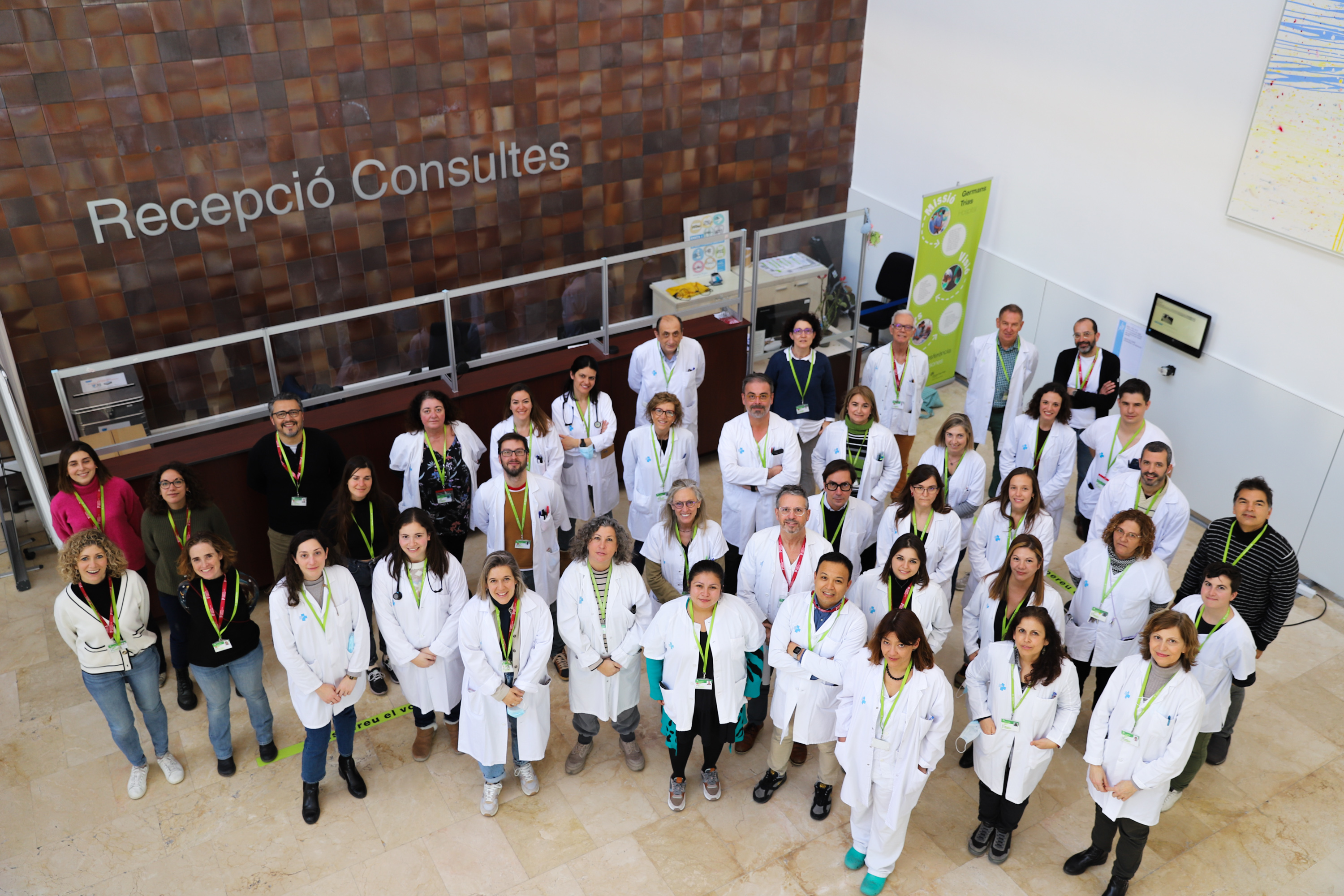
The team of the Infectious Diseases Service at Hospital Germans Trias comprises staff employed by the hospital itself in the clinical care area and professionals from the Lluita contra les Infeccions Foundation (FLI) for clinical research.
Medical and research team
Roger Paredes - Head of Service
- HIV Unit
Eugènia Negredo - Head of Section
José Moltó - Specialist Doctor
Beatriz Mothe - Specialist Doctor
Lucía Bailón - Specialist Doctor
Susana Benet - Specialist Doctor
José Ramón Santos - Specialist Doctor
Josep Ferrer – Specialist Doctor
Anna Bonjoch - Specialist Doctor
Boris Revollo - Specialist Doctor
Patricia Echeverría - Specialist doctor, Day Hospital Coordinator
Diana Hernández - Researcher - FLI
Sofía Sábato - Research Doctor – FLI
Andrea Vázquez - Research Doctor – FLI
- Emerging Respiratory Infections
Lourdes Mateu – Programme Director for Persistent COVID
Gemma Lladós - Specialist Doctor
Cora Loste - Specialist Doctor
Francesco Aiello – Specialist Doctor
- Sexually transmitted infections
Oriol Mitjà - Head of Section, STI and NTD Research Group
Susana Muñoz - Specialist Doctor, Head of the STI Clinic
Anton Brusov – Specialist Doctor
Clara Pérez – Specialist Doctor
Camila González-Beiras - Postdoctoral Researcher - FLI
- BCN-Checkpoint
Ángel Rivero - Specialist Doctor
José Miguel Cabrera - Specialist Doctor
Mariusz Lucejko - Specialist Doctor
Adrià Mendoza - Research Physician - FLI Specialist
Roberto Vates – Specialist Doctor
- Infections in immunocompromised people
Mª Lluïsa Pedro-Botet - Head of Section
Pedro Puerta – Specialist Doctor
Rosa Benítez - Specialist Doctor
Carmen Bracke - Specialist Doctor
Alba Romero - Specialist Doctor
Ana Peris - Specialist Doctor
- Osteoarticular infections
Esteban Reynaga - Specialist Doctor
Javier Díez de los Ríos – Specialist Doctor
- Cardiovascular Infections
Lourdes Mateu - Specialist Doctor
Alba Bergas – Specialist Doctor
- Multidrug-resistant bacterial infections and the PROA programme
Nieves Sopena – Specialist Doctor
- International Health - PROSICS MetroNord
Sílvia Roure - Programme Director
Sergio España - Specialist Doctor
Laura Soldevila - Specialist Doctor
Elia Fernández – Specialist Doctor
Lluís Valerio - Specialist Doctor
Xavier Vallès - Research Doctor
- Psychology
Jose A. Muñoz-Moreno - Clinical Psychologist - Neuropsychology
Anna Prats - Neuropsychologist - FLI
Carmina Rodríguez-Fumaz - Clinical Psychologist
Nursing team
Yolanda Romero – Supervisor
Olga Antolín - Supervisor
María Isabel Cuadrado - Clinical Nurse
Eva de la Fuente - Clinical Nurse
Tania Baena - Clinical Nurse
Collaborating professionals from other services
Carla Estany - Dietetics and Nutrition
Begoña Lemos - Social Work
Begoña Lemos - Social Work
The service works to prevent, diagnose and treat infections. It carries out this mission through six major areas of expertise:
- HIV. The main objective is to prevent any HIV infection and to treat people who are already infected early. The Service works to offer better treatments, achieve a definitive cure and prevent the physical and psycho-emotional complications of the infection.
- Emerging Respiratory Infections. Focuses on preventing and treating emerging viral respiratory infections (COVID-19, Influenza, Respiratory Syncytial Virus, etc.), preventing their progression to severe forms and reducing mortality and acute and long-term complications. It incorporates the country's first Persistent Covid unit.
- Sexually Transmitted Infections. Focuses on preventing and treating infections transmitted through sexual intercourse. It seeks better treatments, researches new drugs or uses existing ones more effectively.
- Infections in immunocompromised people. It works to reduce the complications and mortality due to serious infections in people with a weakened immune system caused by cancer, organ transplants, congenital immune defects or the prescription of immunosuppressant drugs.
- Serious bacterial infections. The aim is to combat bacterial infections that cause high mortality and clinical complications. This line of research places special emphasis on cardiovascular and musculoskeletal infections, as well as on antibiotic-resistant pathogens and the study of infections originating in the environment and the animal kingdom.
- International health and neglected diseases. It works on the prevention, diagnosis and treatment of infections related to globalisation, both those affecting travellers and the immigrant population. It identifies better diagnostics and treatments for neglected diseases that particularly affect low-resource countries.
The Service works in coordination with the Lluita contra les Infeccions Foundation, IrsiCaixa, the Germans Trias i Pujol Research Institute, and BCN-Check Point.
This collaboration accelerates the transfer of knowledge between healthcare professionals and researchers, ensuring that patients receive the best treatments at all times. This is one of the reasons that makes the Infectious Diseases Service an international benchmark.
Featured service news
In the Infectious Diseases Service, professionals from various healthcare disciplines work in a coordinated manner to provide care centred on each patient's needs. This is delivered through the day hospital, the inpatient unit and outpatient clinics. The Service's outpatient clinics offer:
- Infectious Diseases
- Nursing
- Psychology
- Dietetics
- Social Work
- Proctology: management and treatment of anal pathology, especially that caused by the human papillomavirus.
- Hepatic assessments: monitoring of hepatitis C virus infection in HIV-co-infected patients.
- PrEP (Pre-exposure prophylaxis for HIV)
- Other: coordinated care with other hospital services, such as general surgery, trauma, cardiac surgery, cardiology, gynaecology, plastic surgery, nephrology or ophthalmology.
HIV
- Diagnosis and treatment
- Care
- Vaccinations
- Ageing and comorbidities
- Liver disease
- Psychology
Emerging Respiratory Infections
- Better treatments and new molecules
- Pandemic control strategies
- Characterisation of persistent COVID-19
- Clinical trials of new treatments for persistent COVID-19
Sexually transmitted infections
- Syphilis
- MPox
- Human papillomavirus
- Pre-exposure prophylaxis (PrEP)
Infections in immunocompromised people
- Haemato-oncology
- Solid organ transplantation
- Primary and secondary immunodeficiencies
Severe bacterial infections
- Legionella
- Osteoarticular infections
- Infective endocarditis and cardiovascular device infections
- Central nervous system infections
- Nosocomial infections
- One Health
International Health and Neglected Diseases
- Imported and emerging infections
- Tuberculosis
- Yaws and neglected diseases
The research carried out in the Infectious Diseases Service is conducted through the Lluita contra les Infeccions Foundation, a leading entity in clinical research, treatment and care of infectious diseases, and IrsiCaixa, an international centre and leader in research on HIV/AIDS, COVID-19 and related diseases, the Germans Trias i Pujol Research Institute, a research centre that works to increase scientific knowledge to improve the health and medical care of patients and the community, where we conduct translational research on Legionella and other bacterial diseases, and BCN-Check Point, a community centre for the detection of HIV and other sexually transmitted infections.
Additionally, the Lluita contra les Infeccions Foundation has two essential support services to promote, accelerate and consolidate the scientific rigour and the highest ethical and regulatory standards of the Infectious Diseases Service's research:
- CTU – Clinical Trials Unit. The Foundation's Clinical Trials Unit aims to conduct clinical trials with drugs or advanced therapies, which are a fundamental element of the independent research carried out at the Foundation.
- CRO – Clinical Research Organisation. The CRO offers services related to the management of clinical trials and studies, acting as a liaison between the investigator and other study stakeholders such as ethics committees, regulatory agencies, suppliers and participating hospitals.
Collaboration with other hospital and primary care services, as well as with national and international centres of excellence, accelerates the transfer of knowledge between healthcare professionals and researchers, ensuring that patients receive the best treatments at all times.
The Infectious Diseases Service provides teaching in the following areas:
Undergraduate teaching
- Faculty of Medicine, Autonomous University of Barcelona (Coordinator, Dr Pedro-Botet)
- Responsible for the theoretical-practical modules on infectious diseases
- Members of the simulation teaching group
- Faculties of Biosciences and Medicine, University of Vic-Central University of Catalonia (Coordinator, Eugènia Negredo)
- Participation in theoretical classes, practical seminars and monographs, and final year project, relating to various infectious diseases in undergraduate courses
Postgraduate teaching
- Supervision of doctoral theses
- Participation in the Official Master's in One Health at UAB through theoretical classes
- Training of medical interns (MIR): the department hosts external resident rotations in accordance with the MIR training programme
- Rotation programme for foreign doctors and researchers in our department
Continuous training
- Service Clinical Sessions: Held weekly in a semi-presential format and accredited with teaching credits by the ICS
- Congresses and symposia. The service encourages its members to participate continuously in the leading international scientific congresses on infectious diseases
- External rotation programme for consultants and researchers at international centres of excellence in infectious diseases
Through ScienHub Learning, the Service develops a significant specialised teaching activity with the best international experts for healthcare professionals.
Contacte: infoinfeccions.germanstrias@gencat.cat