


Neurosurgery
- Presentation
- Healthcare services
- Team
- About diseases or procedures
- Research
- Teaching
- Contact
Codi servei:
Recerca:
The Neurosurgery Service has a highly established and recognised research programme, with participation in multicentre projects, clinical trials, international collaborations and a scientific track record supported by numerous publications and doctoral theses. Research is organised both within the service's own lines and in collaboration with other hospital departments and with regional, national and international reference centres.
Our scientific activity is carried out in close coordination with the centre's Multidisciplinary Clinical Research Unit (UPIC) and the Germans Trias i Pujol Research Institute (IGTP), which facilitates participation in Phase I–IV studies, observational studies and multicentre projects, as well as the efficient recruitment of patients for clinical trials. This infrastructure has enabled the consolidation of research contracts for members of the service upon completion of their residency.
► Current research lines and active projects
The Neurosurgery Service participates in and leads multicentre projects of high scientific impact, some of which are funded by competitive calls:
Projects
- Blood-brain barrier dysfunction and oxidative stress in cerebral arteriovenous malformations
Multicentre translational study.
Funding: La Marató de TV3 Foundation (2021–2024).
Translational research focused on the mechanisms of secondary post-resection damage.
- Early and minimally invasive surgery in intracranial haematomas
Multicentre study.
Funding: ISCIII – FIS Grant (2023–2025).
Evaluation of early biomarkers and their role in secondary brain injury.
- Intestinal microbiota variability and mortality in subarachnoid haemorrhage
Funding: Trias Talents Grant 2023.
- Consolidation of research into minimally invasive evacuation of intracranial haematomas
Funding: Trias Sapiens Grant 2023.
- Relationship between seasonality, environmental pollution and incidence of spontaneous SAH
Study by the Neurosurgery Department without competitive funding.
Completed projects
- Prospective registry of subarachnoid haemorrhage in Catalonia
Multicentre collaboration. Funding: Ictus Foundation.
- REACT (Clazosentan) multicentre clinical trial
International study on the prevention of vasospasm after aneurysmal SAH.
► Doctoral Theses from the Service
The Service of Neurosurgery has a long history of doctoral theses that have contributed to the generation of knowledge in areas such as functional neurosurgery, vascular surgery and neuro-oncology:
- ‘Functional stereotactic surgery in Parkinson's disease’
Dr Jorge Luis Muñoz – Instituto Superior de Ciencias Médicas de La Habana (Cuba).
- ‘Surgical treatment of low-grade gliomas and working memory’
Dr Pilar Teixidor – University of Barcelona.
- ‘Aneurysms of the Middle Cerebral Artery: Microsurgical Advances and Outcomes’
Dr Ana Rodríguez-Hernández – University of Valladolid.
- ‘Hydrocephalus in Aneurysmal SAH: Prediction of Shunt Dependence and New Risk Factors’
Dr Roser Garcia-Armengol – Autonomous University of Barcelona.
► Participation in clinical trials and translational research
The service's research includes both clinical and basic studies, placing us in a mixed model of translational research. We are particularly involved in:
- Regular participation in international clinical trials in vascular neurosurgery, neuro-oncology, functional neurosurgery and neurotrauma.
- Close collaboration with research groups in biomarkers, advanced neuroimaging, hydrocephalus, neurodegenerative diseases and cerebrovascular diseases.
- Participation in European and international consortia and networks in neurosurgery (for example, EANS and established collaborations with world-renowned centres).
► Collaborations and acknowledgements
The Neurosurgery Service actively collaborates with:
- Centre for Genetic Medicine and Neurocutaneous Diseases (CSUR–Phakomatoses)
Significant involvement in advanced genetic diagnostic projects.
- IGTP research groups, particularly in:
Neuroinflammation and secondary damage.
Biomarkers in HSA and TBI.
Microbiota and neurological diseases.
- Multidisciplinary hospital units, such as Neurocritical Care, Interventional Neuroradiology, Neurology and Neuro-oncology.
In addition, the service has been awarded:
- Germans Trias Talents Grants
- Trias Sapiens Fellowship
These accolades have enabled the launch of new research lines and the consolidation of high-impact projects.
► Scientific output
The Neurosurgery Service maintains a strong scientific output. Its international publications in high-impact journals cover fields such as:
- Subarachnoid haemorrhage and hydrocephalus
- Vascular microsurgery
- Interventional neuroradiology
- Neuro-oncology and brain tumours
- Movement disorders and functional surgery
- TBI and secondary brain injury
- Biomarkers in neurocritical care
Members of the department regularly publish in journals such as Acta Neurochirurgica, Journal of Neurosurgery, World Neurosurgery, Neurosurgical Focus, Clinical Neurology and Neurosurgery, Frontiers in Neuroscience, among many others.
Presentation:
The Neurosurgery Service at the Germans Trias i Pujol University Hospital is part of the Clinical Directorate of Neurosciences.
This service is a well-established centre of excellence in tertiary medicine, combining a high-volume clinical service with a clear focus on innovation, research and teaching. With over 1,000 surgical procedures performed annually, the service addresses all complex neurosurgical conditions with a multidisciplinary and personalised approach.
The team is composed of highly qualified neurosurgeons, with a balanced structure that combines experience and innovation. Organised as a cohesive unit, it fosters individual responsibility and teamwork to provide the highest quality of care.
In addition to clinical practice, the department develops leading lines of work in areas such as skull base surgery and deep brain stimulation (DBS), acting as a centre of reference and for the dissemination of knowledge to other institutions. Parallel to this, the team drives translational research projects and actively participate in multicentre studies, collaborating with national and international bodies.
Education is also a fundamental pillar: the department contributes to the continuing professional development of healthcare professionals through accredited courses, seminars and academic activities, whilst integrating the latest surgical and digital technologies into routine clinical practice.
The commitment to excellence in patient care and continuous improvement positions the department as an innovative service, with a forward-looking vision dedicated to medical progress and patient well-being.
Featured service news:
- Hospital Germans Trias implants the world's smallest rechargeable deep brain stimulation device in Spain for the first time.
- Hospital Germans Trias introduces the use of augmented reality glasses in spinal surgeries in Spain.
Tipus Servei: 9
Correu: neurociencies.germanstrias@gencat.cat
Docència:
Pre-graduate teaching
The Service of Neurosurgery actively participates in the university education of future doctors through the Teaching Unit of the Can Ruti Campus of the Autonomous University of Barcelona (UAB).
The service collaborates in the theoretical and practical teaching of the Medicine degree, providing specialised clinical training in neurosurgery, both through hospital rotations and seminar activities and sessions integrated with other neurological and surgical specialities.
Postgraduate teaching
The Service of Neurosurgery provides postgraduate training through the Neurosurgery MIR Programme, accepting one resident per year.
The department has been training neurosurgery specialists continuously since 2003, establishing a solid and recognised teaching track record.
Residents have access to training in:
- Functional neurosurgery and stereotaxy
- Vascular neurosurgery
- Complex spine and spinal surgery
- Neuro-oncology
- Emergency neurosurgery and traumatic brain injury
- Minimally invasive procedures
- Image-guided surgery, neuronavigation and augmented reality
They also participate in multidisciplinary sessions, supplementary rotations and research activities linked to the service and the Germans Trias i Pujol Research Institute (IGTP).
Information for residents
- 1 accredited place per year.
- Check the Teaching Guide.
- High participation in national and international congresses.
- Access to competitive research lines and the opportunity to undertake doctoral thesis work.
- Remarkable employment rate after residency, both at the same centre and in national and international reference hospitals.
- Intensive surgical training from the first year, with progressive supervision and participation in high-complexity procedures.
- On-call duties integrated into the Neurosurgery team, with continuous support from consultants and opportunities for emergency surgery training.
- Find out what our residents think about the Neurosurgery service of the Germans Trias.
Continuous training
The Neurosurgery Service holds weekly continuing education sessions for both its own staff and other hospital specialists.
It also organises specialised courses for professionals from other centres, focusing on:
- Surgical approaches to the spine
- Surgery for Parkinson's disease and other movement disorders
- Updates in functional neurosurgery and translational medicine
- Emerging technologies: neuronavigation, augmented reality and minimally invasive surgery
These activities allow the department to maintain a constant level of up-to-date knowledge, strengthen collaboration with other hospitals and position it as a centre of excellence for neurosurgical education in Catalonia.
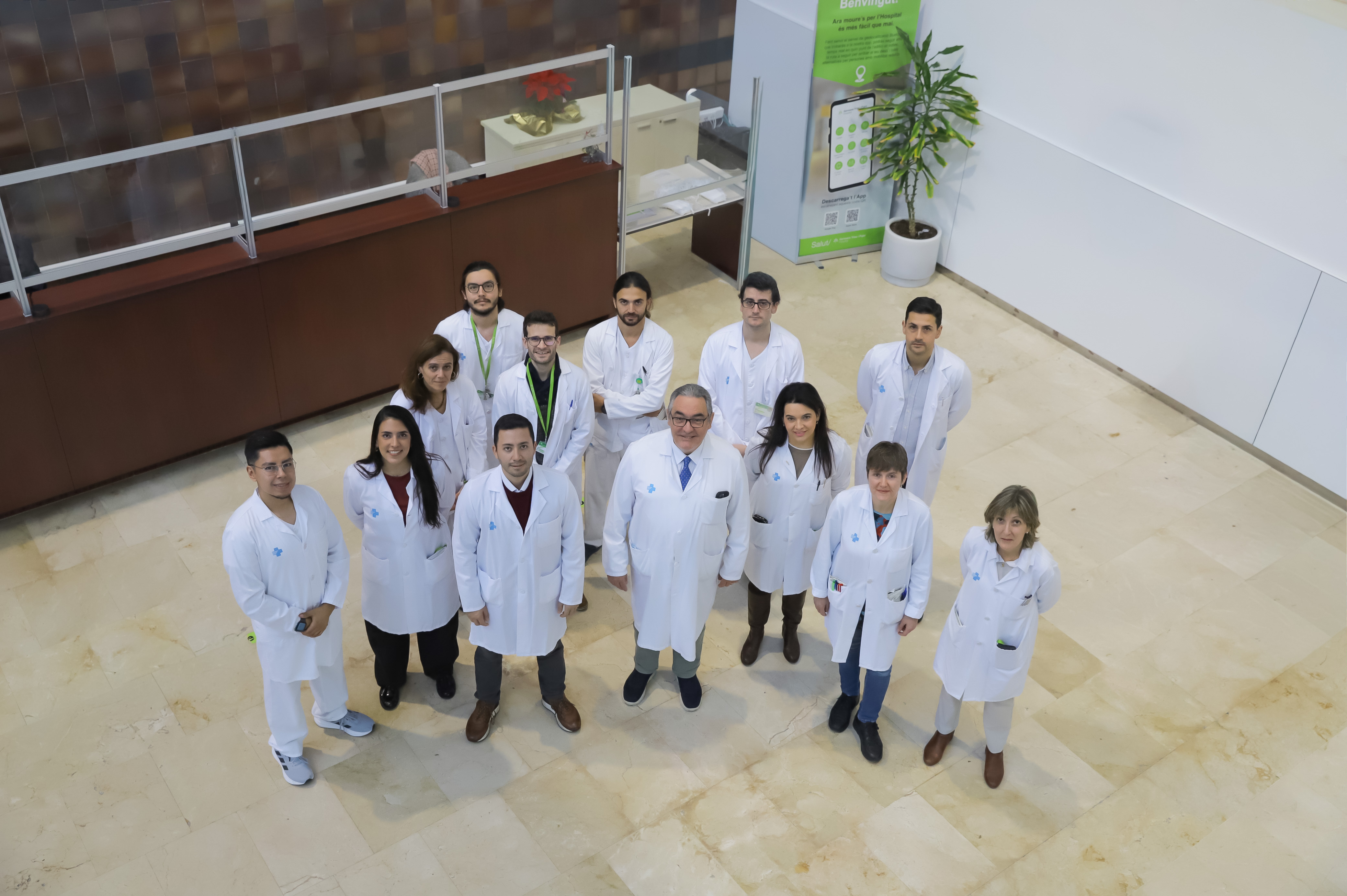
Medical team
Clinical director of Neurosciences.
Head of service. Responsible for neurooncological pathology. Participates in the multidisciplinary unit of pain.
Carlos Javier Dominguez Alonso
Clinical head. Responsible for complex spinal and spinal cord surgery.
Medical specialist. Head of the functional surgery unit and non-invasive transcranial ultrasound surgery. Participates in the multidisciplinary unit of pain and surgery of complex ricks.
Medical specialist. Responsible for open and endoscopic skull base surgery.
Medical specialist. Co-responsible for epilepsy surgery. Responsible for LCR pathology. Participates in the multidisciplinary neurooncology unit.
Medical specialist. Co-responsible for epilepsy surgery and non-invasive transcranial surgery with ultrasound. Participates in the functional surgery unit and in the complex sketch surgery unit.
Medical specialist. Co-responsible for vascular neurosurgery.
Medical specialist. Head of the pediatric neurosurgery unit and member of the cranio-facial pain unit.
Santiago Candela Cantó
Medical specialist. Participates in the multidisciplinary units of neuro-oncology, epilepsy surgery and pediatric neurosurgery.
Medical specialist. Participates in the spinal surgery unit and the endoscopic skull base unit and is responsible for peripheral nerve surgery.
Medical specialist. Participates in the functional surgery unit, non-invasive transcranial surgery with ultrasound and the multidisciplinary pain unit.
Sergio García García.
Medical specialist. Co-responsible for Vascular Neurosurgery. Participates in the endoscopic skull base unit and paediatric neurosurgery.
Pablo Mazón Alvarez
Medical specialist. Participates in the complex spinal surgery unit.
Luisa Parada Arias
Resident doctor.
Mateo Camilo Cortés Rivera
Resident doctor.
Giancarlo Morillo Morán
Resident doctor.
Paula Nicart Mejías
Resident doctor.
Nursing and administrative team
The Neurosurgery Service at the Germans Trias i Pujol University Hospital is part of the Clinical Directorate of Neurosciences.
This service is a well-established centre of excellence in tertiary medicine, combining a high-volume clinical service with a clear focus on innovation, research and teaching. With over 1,000 surgical procedures performed annually, the service addresses all complex neurosurgical conditions with a multidisciplinary and personalised approach.
The team is composed of highly qualified neurosurgeons, with a balanced structure that combines experience and innovation. Organised as a cohesive unit, it fosters individual responsibility and teamwork to provide the highest quality of care.
In addition to clinical practice, the department develops leading lines of work in areas such as skull base surgery and deep brain stimulation (DBS), acting as a centre of reference and for the dissemination of knowledge to other institutions. Parallel to this, the team drives translational research projects and actively participate in multicentre studies, collaborating with national and international bodies.
Education is also a fundamental pillar: the department contributes to the continuing professional development of healthcare professionals through accredited courses, seminars and academic activities, whilst integrating the latest surgical and digital technologies into routine clinical practice.
The commitment to excellence in patient care and continuous improvement positions the department as an innovative service, with a forward-looking vision dedicated to medical progress and patient well-being.
Featured service news:
Emergency neurosurgical care, 24 hours a day, 7 days a week.
Services include:
- Emergency assessment of cranio-cerebral and spinal pathology.
- Urgent second opinions from other departments.
- Specialist nursing care in the emergency neurological and neurosurgical management.
- Diagnostic lumbar puncture.
- Relief lumbar puncture for hydrocephalus or intracranial hypertension.
- Acute surgery for cranio-cerebral and spinal trauma.
- Emergency surgery for intracranial and spinal haematomas.
- Urgent decompression for traumatic, vascular or infectious lesions.
- Urgent evacuation of cerebral or epidural abscesses.
- Multimodal neuromonitoring in severe TBI and infectious vascular pathology.
- Urgent placement of ICP monitors, sensors, spinal drains or decompressive craniectomies.
Continuous care for the neurosurgical patient throughout the diagnostic and therapeutic process.
Services included:
- Assistance for the in-patient in a general ward.
- Non-urgent consultations with other departments.
- Nursing care according to standardised protocols.
- Diagnostic lumbar puncture: CSF drainage and contrast-enhanced puncture.
- Continuous intracranial pressure (ICP) monitoring.
- Multidisciplinary functional, rehabilitative and social assessment.
- Health education for patients and their families.
- Provision of a comprehensive clinical report with a personalised treatment plan.
Care for high-complexity patients and intensive monitoring.
Services included:
- Multimodal neuromonitoring (intracranial pressure (ICP), partial oxygen tension (PtiO2), continuous EEG, Doppler) in severe traumatic brain injury, vascular and infectious pathology.
- Implantation or replacement of cranial clamps, halo-type traction devices.
- Intracranial electrode implantation for ICP monitoring.
- Coordination with the ICU, anaesthesiology, neurology and rehabilitation.
Scheduled outpatient activity for the diagnosis and follow-up of neurosurgical patients.
Services included:
- Follow-up, pre-operative and post-operative appointments.
- Specialist nursing care.
- Diagnostic and decompressive lumbar puncture.
- Image results assessment and surgical planning.
► Cerebral Tumour and Neoplastic Pathology
- Navigation-guided surgery.
- CT-guided biopsy.
- Stereotactic or navigation-guided biopsy.
- Tumour resection with 5-ALA fluorescence.
- Surgery with intraoperative ultrasound, navigation and fibretracking.
- Motor cortical stimulation with intraoperative monitoring.
- Endoscopic surgery for interventricular tumours.
► Skull base surgery (multidisciplinary ENT / Ophthalmology)
- Navigation-guided endoscopic pituitary transsphenoidal surgery.
- Orbital and anterior skull base pathology.
- Posterior fossa tumours.
- CSF fistula repair.
► Ventricular Pathology
- Endoscopic interventricular tumour resection.
- Endoscopic ventriculostomy in obstructive hydrocephalus.
- CSF shunts (VP, VA, lumboperitoneal) with or without programmable valves.
► Cranial vascular surgery
- Pre-operative 3D neuroendovascular assessment.
- Fluorescence-guided surgery, navigation and fibre-tracking for aneurysms, vascular fistulas, and cerebral and spinal arteriovenous malformations.
- Cerebral bypass and revascularisation techniques.
► Functional and pain neurosurgery
- Deep brain stimulation (DBS) for Parkinson's disease and abnormal movements.
- Spinal cord stimulators for intractable chronic pain.
- Selective dorsal rhizotomy (DREZ) for neoplastic pain.
- HIFU for the treatment of essential tremor and motor symptoms in Parkinson's disease.
- Microvascular decompression of cranial nerves, as well as thermocoagulation.
► Epilepsy surgery
- Resection of focal epileptogenic lesions with navigation and monitoring.
- Vagus nerve stimulator (VNS) implantation.
►Spine and spinal cord pathology
- Minimally invasive surgery for the cervical, thoracic and lumbar spine.
- Spinal fixation with navigation and intraoperative CT (posterior, anterior or lateral approach).
- Microsurgery for disc herniations and spinal canal stenosis.
- Excision of spinal cord malformations and tumours using high-end microscopy and neurophysiological monitoring.
- Surgery for congenital and traumatic malformations of the occipito-cervical junction.
► Paediatric neurosurgery
- CSF shunts.
- Tumour surgery.
- Correction of neural tube defects.
- Treatment of cranial bone malformations.
► Other procedures
- Cranioplasties with custom-made prostheses.
- Surgery for peripheral nerve injuries (ulnar, median…), neurólisis.
- Surgical treatment of abscess and infectious pathology of the CNS.
- Carpal tunnel release.
- Peripheral nerve neurolysis.
- Spinal rhizotomy.
- Other peripheral nerve decompressions.
Neuronavigation in spinal surgery
Neuronavigation is a technology that allows surgery to be planned and guided with millimetre-accuracy, improving safety and outcomes in complex spinal procedures. Our centre was one of the first hospitals in the Spanish State to introduce neuronavigation in spinal surgery within the public health system, positioning us as a benchmark in innovation and surgical excellence.
The use of this technology has transformed the way we approach degenerative conditions, deformities and revision surgeries, allowing for safer placement of implants, reducing the risk of complications and optimising recovery. This pioneering approach has helped to establish standards that have since been adopted by other centres across the country.
The Neurosurgery Service continues to advance in the application of this technology through continuous improvement processes, specialised training, and the constant updating of our equipment, with the aim of offering more precise, less invasive surgery tailored to the needs of each patient.
Spinal surgery with augmented reality goggles
Augmented reality represents another step in the integration between surgical planning and real-time execution. At the Germans Trias i Pujol University Hospital, the Neurosurgery Department is pioneering the use of augmented reality goggles in degenerative spine surgery, becoming one of the first public centres in Catalonia and in the Spanish State to incorporate this technology.
These goggles project anatomical information and surgical guides directly into the surgeon's field of vision, facilitating the precise placement of implants and optimising the smoothness of the procedure. This innovative technique improves efficiency and safety, especially for patients with complex anatomies or highly challenging surgeries.
Our team's accumulated experience in this field has enabled us to integrate this technology routinely into the management of degenerative spinal conditions, pushing the boundaries of minimally invasive surgery and reinforcing our role as a leading centre.
High-frequency ultrasound for Parkinson's disease and essential tremor
The Neurosurgery Service at Germans Trias has been one of the first public centres in the Spanish State to use high-frequency ultrasound (HIFU) as a non-invasive treatment for movement disorders such as Parkinson's disease and essential tremor.
Unlike conventional surgical techniques, high-frequency ultrasound allows the creation of therapeutic lesions in deep areas of the brain without the need for an incision, without radiation and without placing any implants. This technology is particularly relevant for patients who are not suitable candidates for traditional surgery or who are seeking a less invasive alternative.
Parkinson's disease
Parkinson's disease is a neurodegenerative movement disorder characterised by bradykinesia, rigidity and tremor, which progressively affects quality of life. In selected patients, high-frequency ultrasound can significantly reduce the most disabling motor symptoms.
Our service offers a multidisciplinary assessment and a personalised approach, combining technological innovation with comprehensive and ongoing care.
Essential tremor
Essential tremor is one of the most common movement disorders and can significantly limit everyday activities such as writing, eating or dressing. The application of HIFU has represented a paradigm shift, offering an effective, safe therapeutic option with immediate recovery.
Our experience and the early adoption of this technology have established us as a centre of reference for the treatment of medication-refractory tremor.
The Neurosurgery Service has a highly established and recognised research programme, with participation in multicentre projects, clinical trials, international collaborations and a scientific track record supported by numerous publications and doctoral theses. Research is organised both within the service's own lines and in collaboration with other hospital departments and with regional, national and international reference centres.
Our scientific activity is carried out in close coordination with the centre's Multidisciplinary Clinical Research Unit (UPIC) and the Germans Trias i Pujol Research Institute (IGTP), which facilitates participation in Phase I–IV studies, observational studies and multicentre projects, as well as the efficient recruitment of patients for clinical trials. This infrastructure has enabled the consolidation of research contracts for members of the service upon completion of their residency.
► Current research lines and active projects
The Neurosurgery Service participates in and leads multicentre projects of high scientific impact, some of which are funded by competitive calls:
Projects
- Blood-brain barrier dysfunction and oxidative stress in cerebral arteriovenous malformations
Multicentre translational study.
Funding: La Marató de TV3 Foundation (2021–2024).
Translational research focused on the mechanisms of secondary post-resection damage.
- Early and minimally invasive surgery in intracranial haematomas
Multicentre study.
Funding: ISCIII – FIS Grant (2023–2025).
Evaluation of early biomarkers and their role in secondary brain injury.
- Intestinal microbiota variability and mortality in subarachnoid haemorrhage
Funding: Trias Talents Grant 2023.
- Consolidation of research into minimally invasive evacuation of intracranial haematomas
Funding: Trias Sapiens Grant 2023.
- Relationship between seasonality, environmental pollution and incidence of spontaneous SAH
Study by the Neurosurgery Department without competitive funding.
Completed projects
- Prospective registry of subarachnoid haemorrhage in Catalonia
Multicentre collaboration. Funding: Ictus Foundation.
- REACT (Clazosentan) multicentre clinical trial
International study on the prevention of vasospasm after aneurysmal SAH.
► Doctoral Theses from the Service
The Service of Neurosurgery has a long history of doctoral theses that have contributed to the generation of knowledge in areas such as functional neurosurgery, vascular surgery and neuro-oncology:
- ‘Functional stereotactic surgery in Parkinson's disease’
Dr Jorge Luis Muñoz – Instituto Superior de Ciencias Médicas de La Habana (Cuba).
- ‘Surgical treatment of low-grade gliomas and working memory’
Dr Pilar Teixidor – University of Barcelona.
- ‘Aneurysms of the Middle Cerebral Artery: Microsurgical Advances and Outcomes’
Dr Ana Rodríguez-Hernández – University of Valladolid.
- ‘Hydrocephalus in Aneurysmal SAH: Prediction of Shunt Dependence and New Risk Factors’
Dr Roser Garcia-Armengol – Autonomous University of Barcelona.
► Participation in clinical trials and translational research
The service's research includes both clinical and basic studies, placing us in a mixed model of translational research. We are particularly involved in:
- Regular participation in international clinical trials in vascular neurosurgery, neuro-oncology, functional neurosurgery and neurotrauma.
- Close collaboration with research groups in biomarkers, advanced neuroimaging, hydrocephalus, neurodegenerative diseases and cerebrovascular diseases.
- Participation in European and international consortia and networks in neurosurgery (for example, EANS and established collaborations with world-renowned centres).
► Collaborations and acknowledgements
The Neurosurgery Service actively collaborates with:
- Centre for Genetic Medicine and Neurocutaneous Diseases (CSUR–Phakomatoses)
Significant involvement in advanced genetic diagnostic projects.
- IGTP research groups, particularly in:
Neuroinflammation and secondary damage.
Biomarkers in HSA and TBI.
Microbiota and neurological diseases.
- Multidisciplinary hospital units, such as Neurocritical Care, Interventional Neuroradiology, Neurology and Neuro-oncology.
In addition, the service has been awarded:
- Germans Trias Talents Grants
- Trias Sapiens Fellowship
These accolades have enabled the launch of new research lines and the consolidation of high-impact projects.
► Scientific output
The Neurosurgery Service maintains a strong scientific output. Its international publications in high-impact journals cover fields such as:
- Subarachnoid haemorrhage and hydrocephalus
- Vascular microsurgery
- Interventional neuroradiology
- Neuro-oncology and brain tumours
- Movement disorders and functional surgery
- TBI and secondary brain injury
- Biomarkers in neurocritical care
Members of the department regularly publish in journals such as Acta Neurochirurgica, Journal of Neurosurgery, World Neurosurgery, Neurosurgical Focus, Clinical Neurology and Neurosurgery, Frontiers in Neuroscience, among many others.
Pre-graduate teaching
The Service of Neurosurgery actively participates in the university education of future doctors through the Teaching Unit of the Can Ruti Campus of the Autonomous University of Barcelona (UAB).
The service collaborates in the theoretical and practical teaching of the Medicine degree, providing specialised clinical training in neurosurgery, both through hospital rotations and seminar activities and sessions integrated with other neurological and surgical specialities.
Postgraduate teaching
The Service of Neurosurgery provides postgraduate training through the Neurosurgery MIR Programme, accepting one resident per year.
The department has been training neurosurgery specialists continuously since 2003, establishing a solid and recognised teaching track record.
Residents have access to training in:
- Functional neurosurgery and stereotaxy
- Vascular neurosurgery
- Complex spine and spinal surgery
- Neuro-oncology
- Emergency neurosurgery and traumatic brain injury
- Minimally invasive procedures
- Image-guided surgery, neuronavigation and augmented reality
They also participate in multidisciplinary sessions, supplementary rotations and research activities linked to the service and the Germans Trias i Pujol Research Institute (IGTP).
Information for residents
- 1 accredited place per year.
- Check the Teaching Guide.
- High participation in national and international congresses.
- Access to competitive research lines and the opportunity to undertake doctoral thesis work.
- Remarkable employment rate after residency, both at the same centre and in national and international reference hospitals.
- Intensive surgical training from the first year, with progressive supervision and participation in high-complexity procedures.
- On-call duties integrated into the Neurosurgery team, with continuous support from consultants and opportunities for emergency surgery training.
- Find out what our residents think about the Neurosurgery service of the Germans Trias.
Continuous training
The Neurosurgery Service holds weekly continuing education sessions for both its own staff and other hospital specialists.
It also organises specialised courses for professionals from other centres, focusing on:
- Surgical approaches to the spine
- Surgery for Parkinson's disease and other movement disorders
- Updates in functional neurosurgery and translational medicine
- Emerging technologies: neuronavigation, augmented reality and minimally invasive surgery
These activities allow the department to maintain a constant level of up-to-date knowledge, strengthen collaboration with other hospitals and position it as a centre of excellence for neurosurgical education in Catalonia.
Contacte: neurociencies.germanstrias@gencat.cat